A 10-Minute Weekly Routine to Keep Indoor Plants Thriving
Keeping indoor plants healthy doesn’t require hours of attention—just a short, consistent routine you can repeat every week. This guide gives a beginner-friendly, step-by-step 10-minute method to inspect, water, clean, and adjust your plants, followed by variations for different species and a troubleshooting section for common problems.
Step-by-step 10-minute weekly routine
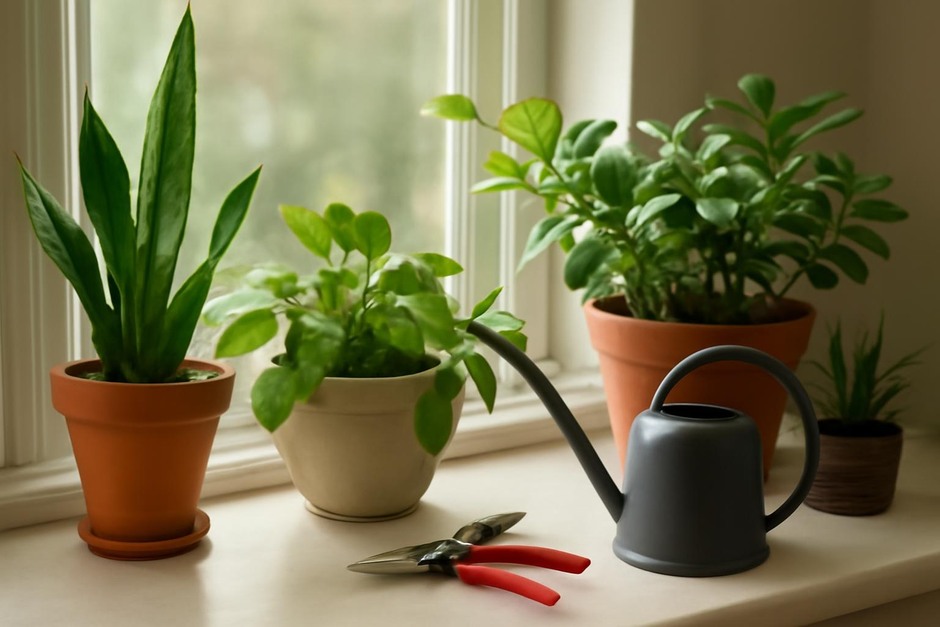
The goal is to make plant care predictable and easy. Gather a small kit before you start: a watering can with a narrow spout, a soft cloth, a pair of clean scissors or pruning shears, and a small tray or bowl for debris.
- Visual sweep (1 minute): Walk around the room and look at each plant. Note anything obvious: drooping, yellowing leaves, pests, or soil that looks very dry or waterlogged.
- Light check (1 minute): Feel how bright the spot is where each plant sits. If it’s near a window, note if it gets morning or afternoon sun. This helps you catch lighting problems before they affect growth.
- Touch the soil (1 minute): Insert a finger about an inch into the soil (or two inches for larger pots). If it feels dry, the plant likely needs water; if it is cold and very wet, hold off and let it drain or dry slightly.
- Water selected plants (3 minutes): Water only those that need it. Pour slowly until water begins to come out of the drainage hole, or until the topsoil feels evenly moist. Use room-temperature water. Avoid a schedule based solely on days; instead, water based on the soil check.
- Clean leaves and trim (2 minutes): Wipe dust from broad leaves with a damp cloth. Remove any brown or yellow leaves and spent blooms with clean scissors. This improves light absorption and reduces pest hiding places.
- Quick pest scan and note-taking (1 minute): Look undersides of leaves and along stems for tiny insects or webbing. If you see anything unusual, note which plant and describe the issue in a simple notebook or phone note for follow-up.
That’s it—about 10 minutes each week. Over time this short check-in will prevent many small issues from becoming larger problems.
Variations for different plant types and conditions
- Succulents and cacti: Use the same routine but reduce watering frequency. For these, test moisture deeper (2–3 inches) and only water when fully dry. When watering, give a good soak and allow full drainage.
- Ferns and moisture-loving plants: These may need more frequent surface checks. Mist the fronds lightly after cleaning if the air is dry, or place the pot on a pebble tray with water for higher humidity.
- Seedlings and young plants: Be gentle with soil checks and use a small spoon or chopstick to test moisture near the edge of the pot to avoid disturbing roots.
- Low-light plants: Rotate these every few weeks so all sides get even light. If growth becomes leggy, try moving the plant to a slightly brighter spot for a few weeks.
Troubleshooting common problems
- Yellowing leaves: If older leaves yellow and drop gradually, that can be natural. If many leaves yellow at once, check for overwatering: allow soil to dry a little and reduce watering frequency.
- Browning leaf tips: Often caused by low humidity or salt buildup. Wipe leaves, flush the soil with plain water once to leach salts, and increase humidity for sensitive species.
- Wilting despite moist soil: This can indicate root rot from poor drainage. Repot into fresh soil with better drainage or temporarily hold watering while roots recover.
- Pests (small insects, sticky residue, webbing): Isolate the plant, gently clean leaves, and remove visible insects. For persistent infestations, repeat cleaning weekly and consider natural options like insecticidal soap safe for houseplants.
- Leggy growth: Move the plant to a brighter spot and prune back long stems. Rotating plants regularly prevents leaning toward a light source.
Short repeatable checklist (use this in your notebook or phone)
- Visual sweep: any obvious issues?
- Light check: is the location appropriate?
- Soil test: dry or moist?
- Water as needed (slow, even pour)
- Wipe leaves, trim dead material
- Scan for pests and note any problems
With ten minutes each week, you’ll catch small issues early, keep plants cleaner and happier, and develop a steady habit. The routine is flexible—adapt it to your collection and environment—and over time you’ll build confidence in reading your plants’ needs.